How automated lubrication technology is transforming uptime, safety, and equipment life across Indian industry
Here's something most plant managers learn the hard way: a bearing rarely fails because it's old. It fails because nobody got enough grease to it in time. That gap between “should have been lubricated” and “actually was” is where most industrial breakdowns quietly begin. More factories across India are closing that gap now, moving off manual greasing rounds and onto a proper industrial lubrication system instead. Rolling mill, cement kiln, packaging line — doesn't matter what you run. If a moving part needs oil or grease and someone still has to remember to walk over and apply it by hand, there's risk built into your schedule. This guide covers what these systems actually do, the different types on the market, and how to pick one without overspending on capacity you don't need.
What Is a Centralised Lubrication System?
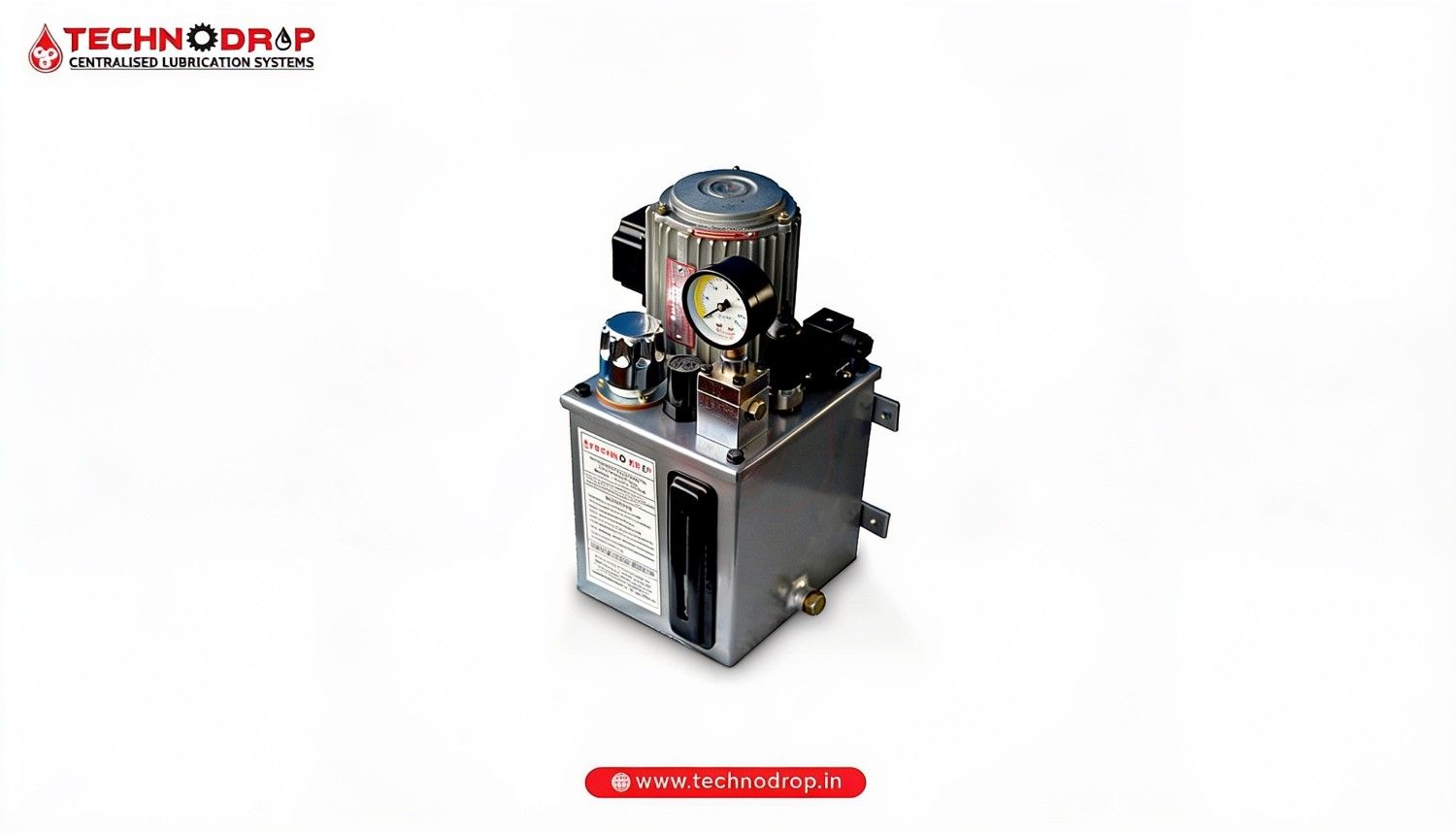
Strip away the branding and a centralized lubrication system is really just a reservoir, a pump, some tubing, and a set of metering valves working together on a timer. One tank feeds every lubrication point on the machine, dosed out automatically instead of one at a time by hand. Compare that to the old way: a technician with a grease gun, working down a list, hoping they don't miss a fitting. A central lubrication system skips that walk entirely and pushes measured lubricant through a manifold the second the controller tells it to.
What you'll typically find inside one:
- A reservoir sized to feed dozens, sometimes hundreds, of points
- A timer or PLC trigger that fires the cycle automatically
- Distribution blocks dividing the lubricant evenly line by line
- Either a progressive or return-line layout, depending on the machine
Why Is It Important?
Manual greasing has a habit of going wrong in both directions. Some points get too much (wasted lubricant, sometimes seal damage), others get skipped for weeks because someone was on leave. An automatic lubrication system doesn't care who's on shift. It doses the same amount, on the same schedule, every single time.
- Cuts unplanned downtime from dry running or seizure
- Stops the wastage that comes from over-greasing “just to be safe”
- Keeps staff away from pinch points and hazardous zones during greasing
- Adds years to bearing, chain, and gear life
- Frees your maintenance team to fix problems instead of chasing a grease schedule
Types and Variants
No single design fits every machine, which is why centralized lubrication systems come in a handful of configurations. Pick based on your layout and load, not just what's cheapest today — retrofitting later almost always costs more.
- Single-line systems: one main line feeding valves in sequence, fine for smaller, compact machines
- Dual-line systems: two alternating lines built for long pipe runs and heavier-duty equipment
- Progressive systems: an automatic grease lubrication system built around one distributor block; simple, compact, common on smaller units
- Oil-based setups: a centralized oil lubrication system for high-speed spindles and gearboxes that need a thin, consistent film
- Grease-based setups: a centralized grease lubrication system built for heavier loads — open gears, chains, large bearings
Features to Look For
Not all lubrication equipment on the market is built the same, and the difference usually shows up after a year or two, not on day one.
- Fittings and tubing that resist corrosion (cheap fittings fail first)
- Dosing that's adjustable per point, not one fixed output for everything
- Some form of monitoring — even basic alerts for low level or a blocked line help
- Compatibility with whatever grease or oil grade you're already running
- A reservoir that actually fits the space you have
- Refill access that doesn't mean shutting the line down
Product Overview
Good centralized lubrication system manufacturers rarely sell just one part. Expect a full range: motorised pump units, progressive and dual-line distribution blocks, oil mist generators, portable units for smaller machines, plus fittings, nipples, and metering cartridges to match. Buying the pump, the blocks, and the fittings from one supplier saves headaches later — spares match, nothing needs adapting on-site, and installation goes faster because the components were designed to work together in the first place.
Benefits
- A consistent lubricant film at every point, every single cycle
- Lower overall maintenance cost once breakdowns drop
- Less lubricant used overall, and a cleaner shop floor
- Easier compliance with your preventive maintenance schedule
- Longer intervals between bearing, chain, and gear replacement
- Less friction, which quietly saves energy too
FACT: Measured, automated dosing tends to use noticeably less grease than manual greasing, simply because nobody's guessing anymore.
Applications and Use Cases
Wherever machinery runs hard and continuously, an industrial lubrication system tends to show up:
- Steel rolling mills and continuous casting lines
- Cement kilns, crushers, conveyor systems
- Turbines, pumps, and compressors in power generation
- Packaging, printing, and textile machinery
- Mining equipment working in dust and abrasive conditions
- Injection moulding and heavy fabrication setups
Comparison Table
Grease and oil systems aren't interchangeable — here's how they generally stack up against each other.
| Parameter | Grease-Based Systems | Oil-Based Systems |
|---|---|---|
| Best Suited For | Heavy loads and slow-moving parts | High-speed, precision components |
| Typical Delivery Method | Distribution blocks and metering valves | Metered spray or mist delivery |
| Maintenance Frequency | Periodic refill and visual inspection | Frequent level checks, smaller refill volumes |
| Common Industries | Steel, cement, mining, heavy engineering | Textiles, packaging, precision manufacturing |
| Contamination Resistance | Higher resistance to dust and moisture | Requires a cleaner operating environment |
Expert Tips and Buying Guide
Here are the detailed expert tips and buying guide reference for you:
- Size the pump around your actual point count and pipe distance, not this year's budget alone
- Leave room to expand the distribution blocks later — plants rarely stay the same size
- Check that the supplier still stocks matching central lubrication system fittings years down the line
- Ask who trains your team on the controller, and what happens if something goes wrong
- Read the warranty terms properly, especially for pumps and any electronic monitoring parts
- Favor suppliers who've actually worked in your industry before, not just adjacent ones
DID YOU KNOW: A large share of unplanned mechanical failures in industrial plants trace back to poor lubrication, not worn-out parts.
Techno Drop Engineers
Techno Drop Engineers is a reputed manufacturer of centralized and automated lubrication systems in India. Founded in 1999, the organization concentrates on offering reliable lubricating products for improving efficiency and increasing durability of machines with 26+ years of experience. The organization offers its lubrication systems to diverse sectors such as steel plants, cement works, thermal power plants, mines, and manufacturing units. Techno Drop Engineers is run by Sagar Kaushik. Some important features of Techno Drop Engineers include quality products, experienced engineers, quality manufacturing processes, and excellent customer support services.
FAQs
1. How often does a centralized lubrication system need maintenance?
Ans: Not as often as people assume. Most setups just need a periodic check on reservoir levels, a look at the tubing for wear, and occasional cleaning of distribution blocks. Compare that to daily manual greasing rounds, and the maintenance load drops massively. Most plants schedule inspections monthly, sometimes quarterly, depending on how hard the machines run.
2. Can one system handle both oil and grease lubrication?
Ans: Not usually, no. Oil and grease need different pump designs, different metering valves, and different distribution setups because their flow behavior is completely different. Some plants run separate oil-based and grease-based systems side by side to cover every machine type. If your equipment needs both, plan for two systems rather than forcing one to do a job it wasn't built for.
3. Is a centralized lubrication system worth it for a smaller factory?
Ans: Often, yes. Even a compact progressive system pays for itself once you count the labor hours saved and the breakdowns avoided. Smaller plants don't need the same capacity as a steel mill, so single-line or progressive setups usually fit fine. It's less about factory size and more about how many lubrication points you're currently managing by hand.
4. What happens if a lubrication line gets blocked?
Ans: A blocked line stops lubricant from reaching that point, which is exactly why monitoring matters. Better systems include alerts that flag pressure changes or blockages before damage happens downstream. Left unnoticed, a blocked line can starve a bearing of grease for weeks without anyone realising it. That's the whole argument for investing in electronic monitoring instead of skipping it.
5. How long does installation usually take?
Ans: It depends heavily on machine layout, point count, and whether you're retrofitting an existing line or building fresh. Simple single-line setups can go in within a day or two. Larger dual-line networks across multiple machines take longer, especially if tubing routes need custom planning. Matched components from one supplier tend to speed things up noticeably.
6. Does switching to automatic lubrication actually reduce grease consumption?
Ans: Yes, and it's one of the more noticeable savings. Manual greasing tends to overcompensate out of caution, since nobody wants to under-grease and risk a failure. Automated dosing removes that guesswork entirely, delivering exact measured amounts on schedule. Most plants see a real drop in overall lubricant usage within the first few months of switching.
Conclusion
None of this is about chasing the newest equipment on the market. A centralized lubrication system earns its keep by protecting machinery that's expensive to replace and even more expensive to have sitting idle. Single-line setups handle the smaller jobs; dual-line networks take on the heavy industry cases. Somewhere in between, there's a configuration that fits what you actually run. Get the pump, the distribution blocks, and the fittings right, and lubrication stops being a task on someone's to-do list — it just runs in the background, doing its job.
| Talk to a lubrication systems specialist at Techno Drop Engineers about your machines before your next scheduled shutdown, and stop losing hours to something as preventable as a dry bearing. |