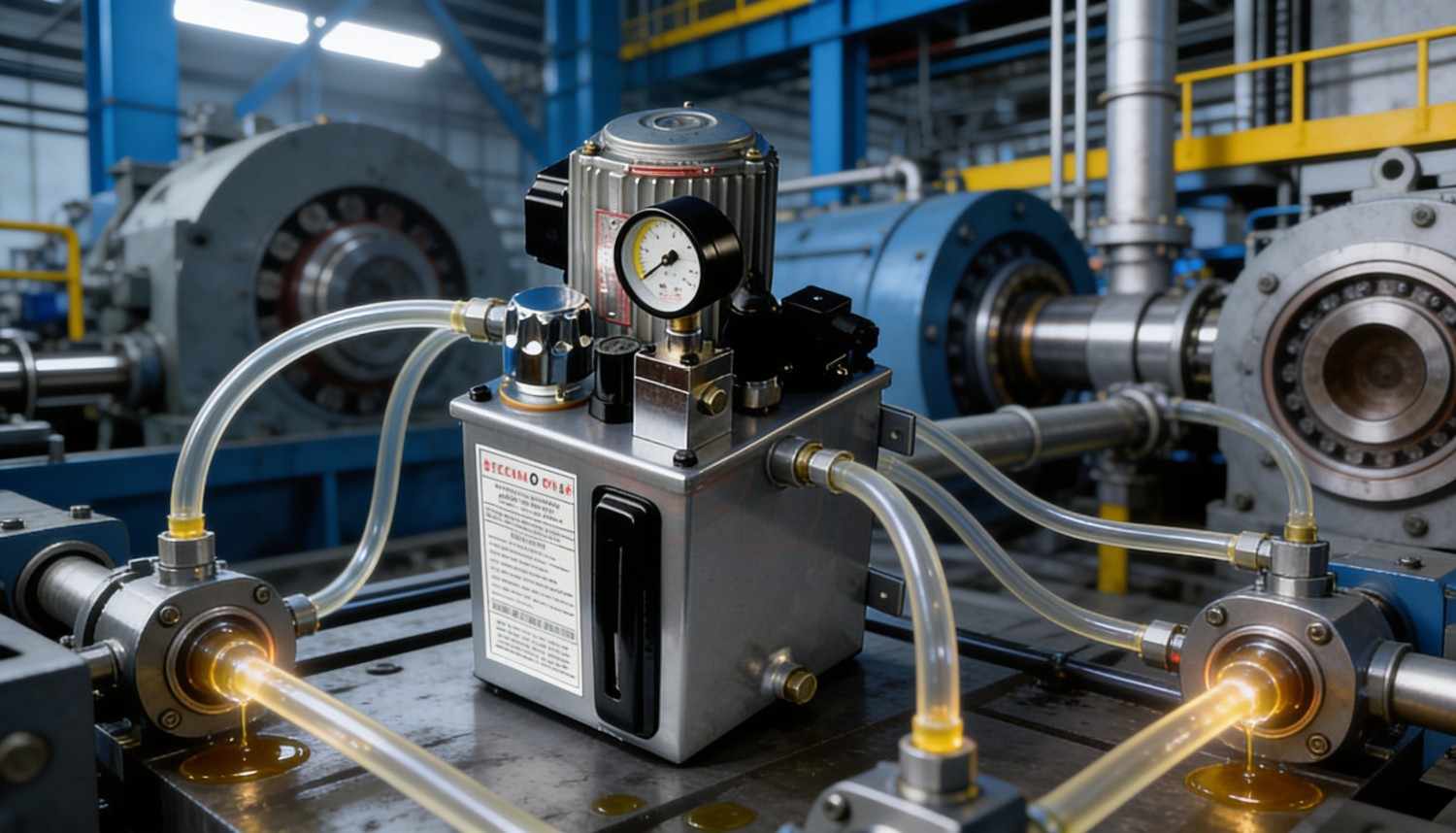
A practical look at automatic lubricant delivery, machine uptime, and picking the right industrial setup.
Most machines don't fail because of bad design. They fail because somebody forgot to lubricate a point on schedule. A bearing runs dry for a week, nobody notices, then the line stops for two days. That's the real cost plants underestimate, not the lubrication system itself. A centralized lubrication system exists to stop exactly this — one pump, one schedule, dozens of points covered without anyone walking the floor with a grease gun.
Not the most exciting part of running a plant. Still, it's the detail that decides whether equipment lasts ten years or three.
What Is a Centralized Lubrication System?
Put simply, a centralized lubrication system pushes oil or grease from one central pump to multiple points on a machine, sometimes across several machines, through pipes and metering valves. No manual rounds. No guesswork on quantity. A central lubrication system handles the dosing itself, on a timer or with a manual trigger when someone wants it.
You'll find this setup anywhere stopping the line costs real money — steel mills, cement plants, power stations, heavy manufacturing floors. Grease or oil, doesn't really matter which. Lubricant reaches the right spot, in the right amount, every cycle, without depending on someone's memory.
Why Is It Important?
Lubrication problems don't give much warning. One dry bearing seizes and suddenly repair costs are way past what the lubrication system would've cost in the first place. An industrial lubrication system takes that risk off the table, mostly.
- Stops metal-on-metal contact before parts start wearing down
- Fewer emergency repairs, less downtime tied to them
- Workers stay clear of moving parts during routine greasing
- Steady lubricant film, even in dusty or vibration-heavy zones
- Preventive maintenance schedules become easier to stick to, not just write down
Did You Know? Most bearing failures on factory floors come down to bad lubrication habits. Not faulty materials.
Types of Centralized Lubrication Systems
Two ways to group these: by the lubricant they use, and by how it gets distributed across the machine.
By Lubricant Type
- Centralized grease lubrication system — sends grease through metering valves to heavy-load spots, bearings and pins mostly
- Centralized oil lubrication system — feeds thin oil to fast components that need a steady flow rather than a dose
- Automatic grease lubrication system — timer or sensor driven, barely needs a hand on it once it's set
By Distribution Method
- Single-line — one main line feeding several metering devices
- Dual-line — built for bigger machines, many points to cover
- Progressive — lubricant moves through one distributor block, point by point
Which one fits depends on how many points need covering and how far apart they sit. No universal answer here. It's application-driven, plain and simple.
Features to Look For
Not every system on the market holds up once it's actually running day after day. A few things worth checking before signing off on a supplier:
- Pump housing that resists corrosion, not just looks sturdy out of the box
- Reliable central lubrication system fittings — ones that don't leak once pressure builds up
- Timers or cycle controllers you can adjust without digging through a manual
- Works with both grease and oil cartridges
- Distributor blocks that are easy enough to open and inspect
- Low-level alerts, so it doesn't run dry without anyone knowing
Trivia: Mechanical lubricators go back to the steam-engine era. Long before electric pumps were even a thought.
Benefits of an Automatic Lubrication System
Switching from manual greasing to an automatic lubrication system changes more on the floor than most people expect going in.
- Frees up hours technicians used to spend on greasing rounds
- Exact lubricant volume each time — no over-greasing, no under-greasing
- Bearings, chains, gears, they all last noticeably longer
- Less lubricant wasted, less cleanup afterward
- Fewer people near moving parts, fewer safety incidents
- Production runs without lubrication-related pauses dragging it down
Fact: Properly lubricated machinery draws less power. Friction loss drops, and it shows up on the energy bill eventually.
Applications and Use Cases
Steel rolling mills, cement crushers and kilns, power plant turbines, mining rigs, packaging lines, manufacturing floors in general — the list runs long. Wherever a machine carries more than a handful of lubrication points, this lubrication equipment earns its keep.
Dusty or high-vibration sites, cement kilns especially, make manual greasing genuinely risky and not just inconvenient. Keeping technicians away from moving parts while the system delivers lubricant on schedule is a big part of why heavy industry moved this direction in the first place.
Manual vs Centralized Lubrication — At a Glance
Understand the difference between manual and centralized lubrication:
| Aspect | Manual Lubrication | Centralized System |
|---|---|---|
| Labour Involvement | High - manual rounds needed | Low - automated delivery |
| Lubrication Accuracy | Inconsistent, operator-dependent | Consistent, metered dosing |
| Risk of Missed Points | Common in large plants | Minimal, all points covered |
| Downtime Risk | Higher due to missed cycles | Lower with scheduled cycles |
| Maintenance Effort | Frequent manual checks | Periodic inspection only |
Expert Tips and Buying Guide
Price shouldn't be the only line item on the checklist when comparing centralized lubrication system manufacturers.
- Ask what grade of material goes into the pumps and fittings — not just what the spec sheet says
- Check how fast spare parts actually show up when something fails
- Make sure the system's rated for your conditions, dust, heat, vibration, whatever applies on your floor
- Ask for references from plants running comparable setups
- Read the warranty terms properly, particularly on pumps and distributors
A system that costs a bit more upfront, but comes with people who actually pick up the phone, usually ends up cheaper across its working life than the budget option nobody can reach for support.
Techno Drop Engineers
Techno Drop Engineers is a reputed manufacturer of centralized and automated lubrication systems in India. Founded in 1999, the organization concentrates on offering reliable lubricating products for improving efficiency and increasing durability of machines with 26+ years of experience. The organization offers its lubrication systems to diverse sectors such as steel plants, cement works, thermal power plants, mines, and manufacturing units. Techno Drop Engineers is run by Sagar Kaushik. Some important features of Techno Drop Engineers include quality products, experienced engineers, quality manufacturing processes, and excellent customer support services.
FAQs
Q1. What is a centralized lubrication system?
Ans: A centralized lubrication system is a setup that delivers oil or grease from one pump to multiple points on a machine through pipes and metering valves. It replaces manual greasing rounds, cutting labour, reducing missed points, and protecting bearings, gears, and chains from premature wear.
Q2. How is it different from manual lubrication?
Ans: Manual lubrication relies on someone walking the floor with a grease gun, hitting each point by memory. A centralized lubrication system removes that guesswork, dosing every point automatically on a schedule. Less labour, fewer missed spots, and far less risk of a dry bearing seizing.
Q3. Which industries rely on centralized lubrication systems the most?
Ans: Steel mills, cement plants, power stations, and mining operations lean on these systems heavily, since stopping the line costs serious money. Manufacturing floors, packaging lines, and heavy engineering setups use them too — anywhere machines run continuously and missing a lubrication point isn't an option.
Q4. How often does a centralized lubrication system need maintenance?
Ans: Most systems need a quick visual check weekly and a deeper inspection monthly — pump levels, fittings, distributor blocks. It's not heavy maintenance, just consistent. Skipping these checks is usually how small leaks or low-lubricant alerts turn into bigger, costlier problems down the line eventually.
Q5. Can one system handle both oil and grease?
Ans: Yes — many centralized lubrication systems are built to handle both, though not usually at the same time. Some plants run separate oil and grease lines depending on what each machine needs. Ask the manufacturer directly; not every pump and distributor combination supports both lubricants.
Q6. How do you pick the right manufacturer?
Ans: Don't just compare price tags. Check material quality, how fast spare parts arrive, and whether they're rated for your plant's conditions — dust, heat, vibration. Ask for references from similar setups. A manufacturer who answers the phone after the sale matters more than any discount.
Conclusion
A centralized lubrication system isn't a luxury add-on. It's one of the few upgrades that genuinely pays for itself — fewer breakdowns, lower labour costs, machinery that just keeps running. Get the configuration right, pick a manufacturer that stands behind what they sell, and the rest mostly sorts itself out.
One production cell or an entire plant with hundreds of points to cover, the logic stays the same either way. Automate it. Stop losing hours to something a pump could've handled on its own.
Ready to upgrade your plant's lubrication routine? Get in touch with Techno Drop Engineers today and keep your machines running without interruption.