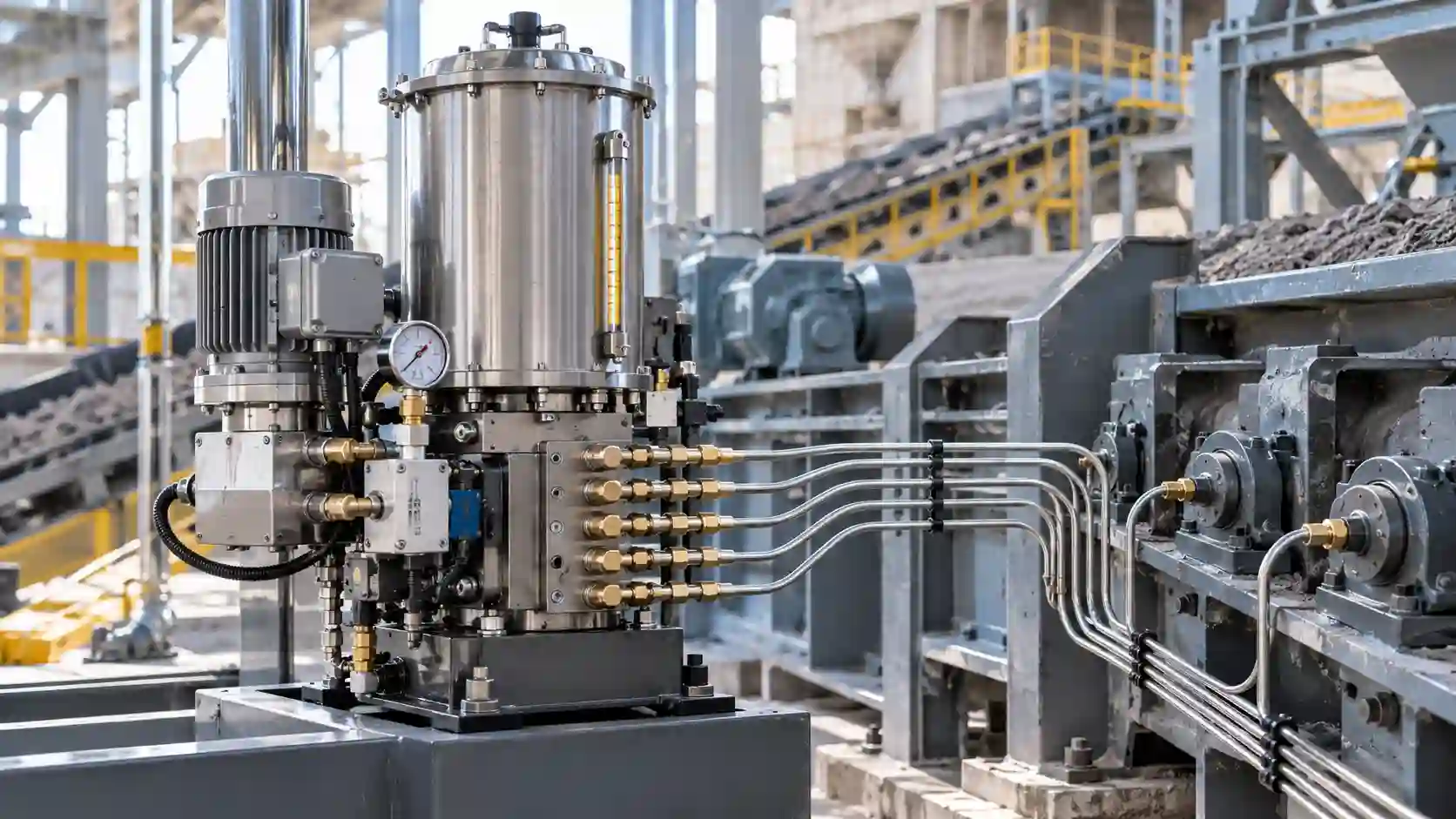
It's easy to hand-feed grease into a machine until the 15th point on a crusher is missed. This is what happens to bearings and production grinds to a halt. A Multiline Grease Lubricator eliminates that risk by automatically pushing grease to a number of points.
However, not all units are appropriate for all plants. The result varies with pressure along with reservoir size and type of grease used. The results of a bad match are dry bearings, loss of grease and recurring maintenance calls. This guide takes you through what's important and helps you cut through the clutter to choose the best Multiline Grease Lubricator Manufacturer.
What Is a Multiline Grease Lubricator and How Does It Work?
It's analogous to a small grease pump station. The grease is pumped from a tank by a motor-driven pump and passed through individual pump elements. All elements supply their own feed line to one lubrication point.
This is the reason why it's called multiline. Each outlet is equipped with its own delivery line allowing grease to be fed to each bearing individually. The cycle is controlled by a timer or controller, and an Automatic Grease Lubricator operates it without an operator walking the shop floor.
In an Industrial Grease Lubrication System, the bearings, bushes and slides are lubricated at regular intervals with the help of such a system. Each line is independent, so a blocked outlet is seen promptly and doesn't cause any trouble. The outcome is reduced lost points, decrease in over-greasing and downtime.
Key Factors to Consider When Choosing a Multiline Grease Lubricator
Each spec sheet may be alike but minutes make the difference in the field. Before you compare quotes, make sure you look at these four areas and do a comparison with your own machine needs. They address most of the selection errors buyers make when purchasing Industrial Lubrication Equipment.
Operating Pressure and Grease Delivery Capacity
Grease does not reach the bearing until pressure is applied. All of these also contribute to a resistance. A High Pressure Grease Lubricator can be more effective at meeting these requirements than a standard grease lubricator.
Look at the output of each outlet as well. A lot more grease is required for a large gear box than a small roller.
A Multiline Grease Lubrication System allows adjustment of lubrication output; match the output and frequency of lubrication to the machine manufacturer's recommendation. Oversizing wastes grease. Undersizing starving bearings.
Grease Lubricant Compatibility
All pumps are not appropriate for all greases. Verify the NLGI grade that it is compatible with. The softer grades will pump with ease in long lines, and the stiffer grades require heavier pumping. The temperature is also important, as grease gets thicker when it's cold and thinner when it's hot.
Not all thickeners are compatible; incompatible thickeners can cause the grease to become hardened or separated. Check the Grease Lubricant in your machine's manual, and select the correct base oil and additives in an Industrial Grease Lubricant for your load.
Number of Lubrication Points and Reservoir Capacity
Check the number of points first. They all must have an outlet and a couple of extra outlets will provide room for future expansion. An under-sized Multi Point Grease Lubrication System results in the need to purchase a second system later on in the project.
The larger the reservoir the greater the amount of grease consumed. Use the refill interval desired and divide the daily usage by that interval to select a tank that will last. A Centralised Grease Lubrication System with a larger grease reservoir will reduce the number of grease changes, but a level indicator will still be useful.
Automation, Durability and Maintenance Requirements
Take a look at the unit's weight without any additional weight. Manual rounds reduced with programmable timers, low level alarms and pressure checks. An Automatic Grease Lubrication System can only be a help if it is kept going in dust and vibration, inquiring about housing, seals and motor ratings.
Access for maintenance is as important. Quick service and inexpensive repairs due to easy refilling, replaceable pump elements and a reliable Industrial Grease Pump.
Important Multiline Grease Lubricator Specifications to Compare
Use this table as a checklist when reading datasheets. Request specific values from each supplier with regard to exact models, rather than catalogue ranges. All industrial Multiline Grease Lubricators should provide verified Multiline Grease Lubricator specifications to avoid problems at installation.
| Parameter | What to Verify |
|---|---|
| Maximum operating pressure | Rated pressure in bar, and working pressure at the outlet |
| Reservoir capacity | Usable grease volume in kg or litres |
| Power supply | Voltage and phase requirement |
| Motor power | Motor rating and duty cycle |
| Outlet connections | Number of outlets and thread size |
| Lubrication controls | Timer or controller type, level and fault alarms |
Common Industrial Applications of Multiline Grease Lubricators
Automatic greasing is best suited to heavy machinery that has a large number of bearings, dust and long running hours. This is where an Industrial Grease Lubricator often is located:
- The cement plants provide the mills, fans and kiln drives.
- Steel mills, for rolling and casting equipment.
- Mining machinery, for loaders, drills and screens.
- Conveyors, for idlers, pulleys and drive units.
- Heavy shafts and eccentric bearings are used in crushers.
- Manufacturing equipment and other heavy duty equipment.
In these applications, the Grease Lubrication System can be used to lubricate areas that are inaccessible or unsafe for hand lubrication. It is also a Heavy Duty Lubrication Equipment that continues in use throughout shifts, ensuring a continuous protection of bearings between scheduled outages.
Selecting a Grease Lubricant for Multiline Lubrication Systems
Grease and lubricating oil are not the same. Oil flows and removes heat and grease holds and prevents contamination. In multiline systems, verify the following:
- The viscosity of the base oil that is appropriate for speed and load.
- Consistency, shown by the NLGI grade.
- The machine is suitable for use in the range of operating temperatures.
- Compatibility with seals and the grease already in use.
Next, consider the supplier. Responsible Grease Lubricant Manufacturers provide datasheets and batch test reports and application advice with ease.Techno Drop Engineers also helps buyers match the grease grade to their lubricator, and a good Lubricant Oil Grease supplier will tell you what not to mix.
How to Choose Reliable Multiline Grease Lubricator Manufacturers in India
Different suppliers will provide different support. Evaluate them on the beyond the word:
- Specifications that are as per your drawings and duty
- Product quality, materials and testing.
- A customized layout and point count
- Clear, comparable pricing
- Warranty will be provided in writing.
- Spare parts availability
- After-sales and service support
Request recommendations from plants like your own. Top-notch Multiline Grease Lubricator Suppliers in India like Technodrop Engineers will inspect your drawings or come to your site before they quote you a price.
Why Choose Techno Drop Engineers for Multiline Grease Lubricators?
Since 1999, Technodrop Engineers has been established in Faridabad, Haryana with the main work of lubrication equipment. The team is a prominent one among the Multiline Grease Lubricator Manufacturers in India, providing grease lubrication systems, dual line lubricators, pumps, metering cartridges and accessories.
They have engineers to assist with point count, pressure and reservoir choice making the unit size to the machine, not to the catalogue average. The range is applicable to cement, steel, mining and general manufacturing. Technodrop Engineers also embraces customization when standard models don't fit the bill.
Ready to compare options? Explore the multiline grease lubricator range and request a quotation.
FAQs
1. What is a multiline grease lubricator used for?
A multiline grease lubricator supplies measured grease to several lubrication points on industrial machinery. Each point has its own line, so bearings get the right amount without manual greasing. That means less wear and fewer unplanned stops.
2. How do I choose the right multiline grease lubricator?
The best multiline grease lubricator is the one that fits your machine. Check pressure, number of outlets, reservoir capacity, grease compatibility and the duty cycle. Then confirm each against the datasheet before ordering.
3. Which grease lubricant is suitable for multiline grease lubricators?
It depends on the NLGI grades the pump supports, the machine maker’s advice and your operating temperature. Pick an industrial grease lubricant that is compatible with the grease already in use, to avoid hardening or separation.
4. What is the maximum operating pressure of a multiline grease lubricator?
It varies by model. Always check the multiline grease lubricator specifications from the manufacturer, and make sure the pressure rating comfortably exceeds your line and bearing requirements.
5. What factors affect multiline grease lubricator prices in India?
Multiline grease lubricator price in India depends on pressure rating, reservoir size, number of outlets, automation level, materials and customization. More outlets and larger tanks cost more, so compare quotes for the same specification.
6. Where can I find reliable multiline grease lubricator manufacturers in India?
Compare credentials, technical support, specifications and written quotations from multiline grease lubricator manufacturers in India. Ask for site references and spare part availability before you decide.