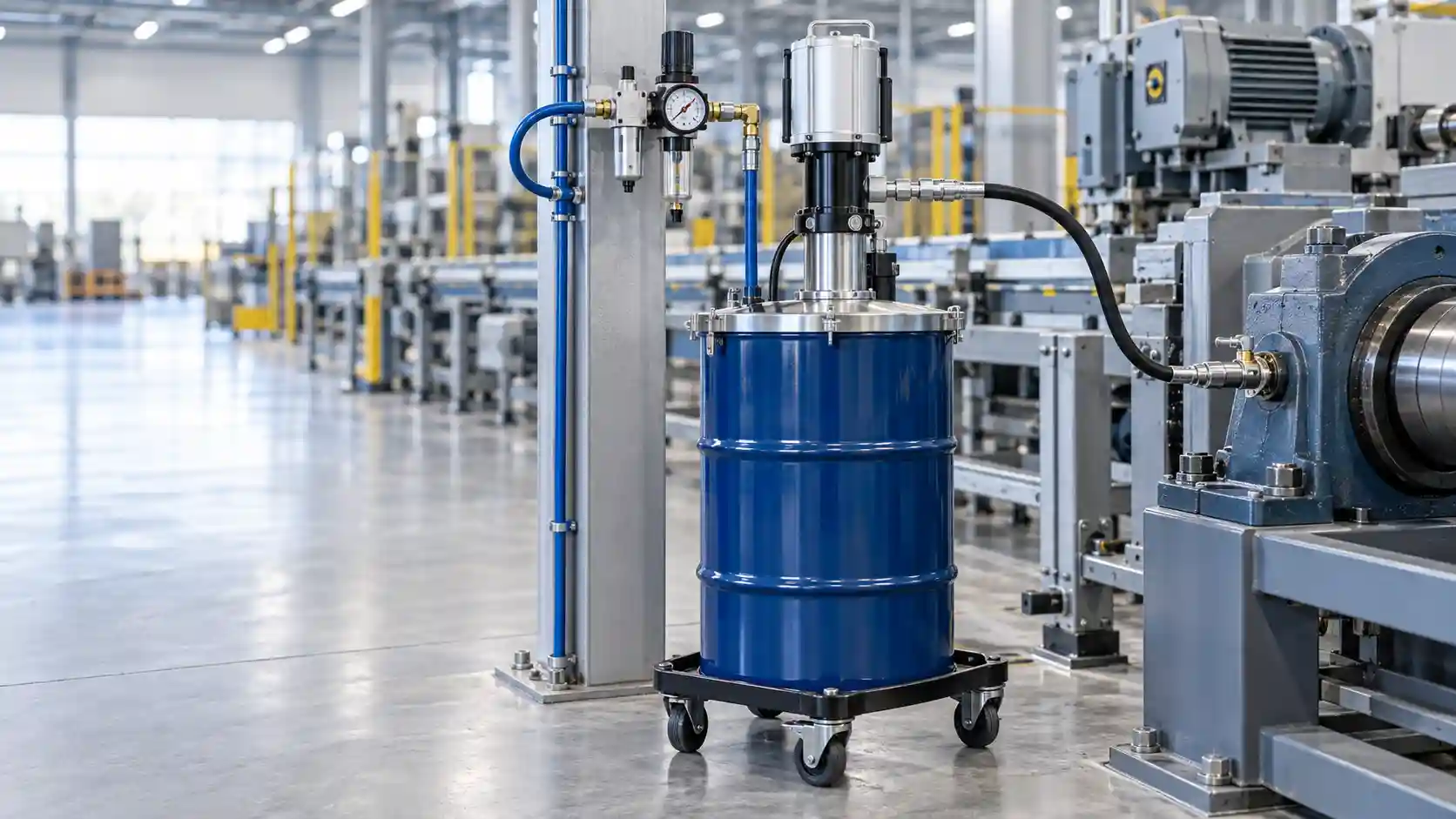
Machinery running dry? Not on your watch. A Pneumatic Grease Pump is the unsung hero of flawless maintenance, driving grease to its precise destination, without the guesswork or the missed spots. This Industrial Lubrication Equipment helps reduce friction and ensure that industries maintain high uptime even with the use of heavy-duty equipment. Bearings remain happy, components wear less and breakdowns become less dramatic.
In short, a reliable supply of grease equals reliable operation—and that's the point of industrial maintenance.
What is a Pneumatic Grease Pump?
Ever had a machine seize up during the shift due to the bearing running dry? Gosh, it's not fun, and it's typically preventable. This is the purpose of a Pneumatic Grease Pump, to keep grease moving before it reaches that stage. Instead of electricity, it operates on compressed air, thus saving plants from a power failure or sparks that could not be tolerated near machinery.
But how does it really work? The piston is pushed down in the pump under a compressed air pressure, creating air pressure in the grease chamber. All that pressure pushes the grease out through the lines and straight where it's required – bearings, joints, gears, anything!
No motor overheating, no wiring headaches. Simply clean, hassle-free lubrication. If you're operating heavy machinery in a challenging or flammable area, an Air Grease Pump is not only easier, it's the smart and safe choice!
How Does a Pneumatic Grease Pump Work?
Do you ever find yourself wondering what is going on under the hood when you turn that "air switch" on? Let's take a closer look at the Pneumatic Grease Pump Working Principle, as once it is understood, the whole system just falls into place.
It begins simply; compressed air in your plant line or compressor is fed directly into the pump inlet. Starting from the beginning no motor to warm up, no electrical hookup, just air doing the work. That air is pushed into a reciprocating motor within, which converts the steady airflow into mechanical action, allowing the whole cycle to continue in a smooth push-pull action.
Now that's the fun part. When that motion is repeated, it compresses the grease in the grease cylinder under a lot of pressure, and is sufficient to move the thickest grease without difficulty. As the piston is retracted, it sucks in fresh grease from the drum. Then on the push stroke, the same grease is pushed through the lines, right where your bearings need it.
This is essentially what an Air Grease Pump will do for your equipment, smoothly shifting from one shift to the next without you even thinking about it.
Primary Components of a Pneumatic Grease Pump
Every solid Pneumatic Lubrication System has a couple of primary components; if you know what each part is, it will be considerably easier to troubleshoot.
- Air Motor, the force to pump the lubricant; this operates on compressed air.
- Grease Reservoir, which is made to hold enough grease to continuously pump the grease to allow you a more extended interval between changes.
- Pump Assembly contains the cylinder and piston; it is used to build pressure to then force the grease through the delivery lines.
- Pressure Regulator, this controls the incoming air pressure that goes into your equipment at the requested rate.
- Follower Plate, this is placed at the top of the grease, and eliminates any Air in the grease. It helps in maintaining consistent grease supply and a tidy operation.
- Delivery System, conveys the pressurized grease to the bearings and joints.
These components come together to offer a highly dependable, workhorse in the Industrial grease pump world, day after day.
Benefits of Using Pneumatic Grease Pumps in Industrial Applications
You know why this is important if you've ever had a bearing that wasn't greased on time and experienced unplanned downtime as a result. Let's discuss the true Benefits of Pneumatic Grease Pump systems and why so many plants are converting.
- High-pressure grease delivery - High pressure is enough to easily pump thick grease over longer distances and still lubricate points otherwise you can't reach due to inaccessibility.
- Reduced Manual Labor - no need for everyone on staff to grease points one by one, your staff has more time to focus on tasks that actually need doing.
- Accurate lubrication - lubricate each point correctly, every single time to reduce over-lubrication and dry spots.
- Minimize Downtime - increased uptime and greater lubrication between shutdowns.
- Increased Machinery Life - decreased wear, as the points become better lubricated with a better system.
In the long run, an appropriate Industrial Lubrication System is not just about your team's comfort, but your equipment's security.
Applications of Pneumatic Grease Pumps Across Industries
Not sure whether it actually caters to your specific industry? Well it most probably does. Pneumatic Grease Pump Applications can be found in the following industries that work in some of the hardest working, most corrosive environments that make use of the pneumatic grease pumps a valuable asset.
- Steel Plants: Tolerates extreme heat and vibrations to keep rollers and conveyors well-lubricated and running smoothly.
- Cement Industries: Handles high amounts of dust and corrosive environments to prevent cranes and kilns from wearing out prematurely.
- Mining Equipment: Powers through isolated, extreme environments where electric lubrication is unfeasible or hazardous.
- Manufacturing Operations: Ideal for keeping the machines on the assembly line rolling where unwanted maintenance downtime on strict schedules simply cannot be tolerated.
- Heavy Machinery: Utilized in Heavy Machinery Lubrication for equipment like excavator, crane, loader machinery.
- Engineering Industries: Capable to maintain the machining centers where small lubrication interruptions are not affordable with respect to tolerance.
Pneumatic Grease Pump vs Hand Operated Grease Pumps: Key Differences
Still cranking a lever by hand every time a machine needs grease? Fair enough, but here's how that stacks up against a Pneumatic Grease Pump, and why so many plants have already made the switch.
| Factor | Pneumatic Grease Pump | Hand Operated Grease Pumps |
|---|---|---|
| Efficiency | Handles large volumes fast with minimal effort | Requires constant manual pumping for every application |
| Pressure Output | Generates high, steady pressure for long lines | Limited pressure, effort-dependent output |
| Operation Method | Runs on compressed air, minimal supervision needed | Relies entirely on physical labor, stroke after stroke |
| Maintenance Requirements | Fewer moving parts under strain, longer service life | More wear from repeated manual force |
| Industrial Suitability | Ideal for heavy-duty, high-frequency lubrication jobs | Better suited for light, occasional use only |
How to Choose the Right Pneumatic Grease Pump for Your Industry?
Choosing the wrong pump can also be expensive because it can be a constant hassle to go through if it breaks down, or you have wasted down time. When comparing options from any Pneumatic Grease Pump Manufacturer, there are some things that are truly important.
- Grease Type: Be sure to test lubricating grease viscosity and consistency as not all pumps are suitable for handling heavy-bodied grease.
- Pressure Required: Ensure that the pump is capable of delivering the necessary pressure for the application, insufficient pressure will result in grease not reaching the points of application.
- Frequency of greasing: Consider the size of your reservoir based on how often you need to grease, the larger your operation the greater the size of your reservoir.
- Environment: Take into account conditions such as dust, heat, or explosive, and for some configurations, air driven safety is really a necessity.
- Machine Application: Use of heavy equipment and precision equipment calls for separate lubrication needs.
- Supplier Expertise: Collaborating with experienced Pneumatic Grease Pump Suppliers ensures superior guidance, installation assistance, and reduced guesswork that results in cost savings.
Why Choose Reliable Pneumatic Grease Pump Manufacturers & Suppliers?
It is necessary to purchase from the manufacturers because it could be the ones that could build their pumps to last and could also meet your needs unlike other manufacturers and Technodrop Engineers offers such experience, strong build and custom needs accompanied by post-purchase support to keep your machines working for all year round.
With the right Pneumatic Grease Pump Manufacturers, you have a smoother journey. From well-established Pneumatic Grease Pump Suppliers to reputable Pneumatic Grease Pump Dealers, Technodrop Engineers is focused on ensuring your machinery remains efficient year after year.
Improve Industrial Lubrication Efficiency with Pneumatic Grease Pumps
It is all about consistency in the end, and that's what a Pneumatic Grease Pump can deliver. With Technodrop Engineers, you will get an Industrial Lubrication Solution designed to ensure reliability, reduced downtime, smoother operations and equipment that lasts for longer. This is the upgrade to make if you are not in for a firefighting break down and want to run smart.
Call us today for a quote or for an expert consultation.
FAQs
1. What is a pneumatic grease pump used for?
It delivers grease to machinery parts using compressed air, keeping bearings and joints properly lubricated.
2. How does a pneumatic grease pump work?
Compressed air drives a piston, building pressure that pushes grease through hoses to the application point.
3. Is a pneumatic grease pump better than a manual one?
Yes, it offers higher pressure, faster output, and far less physical effort than hand-operated pumps.
4. What industries use pneumatic grease pumps?
Steel, cement, mining, automotive, and heavy machinery industries rely on them for consistent lubrication.
5. How often should a pneumatic grease pump be maintained?
Regular checks on air supply, seals, and grease levels help ensure smooth, long-term performance.
6. Can pneumatic grease pumps handle thick grease?
Yes, they're designed to move heavy-bodied grease efficiently, even through long delivery lines.