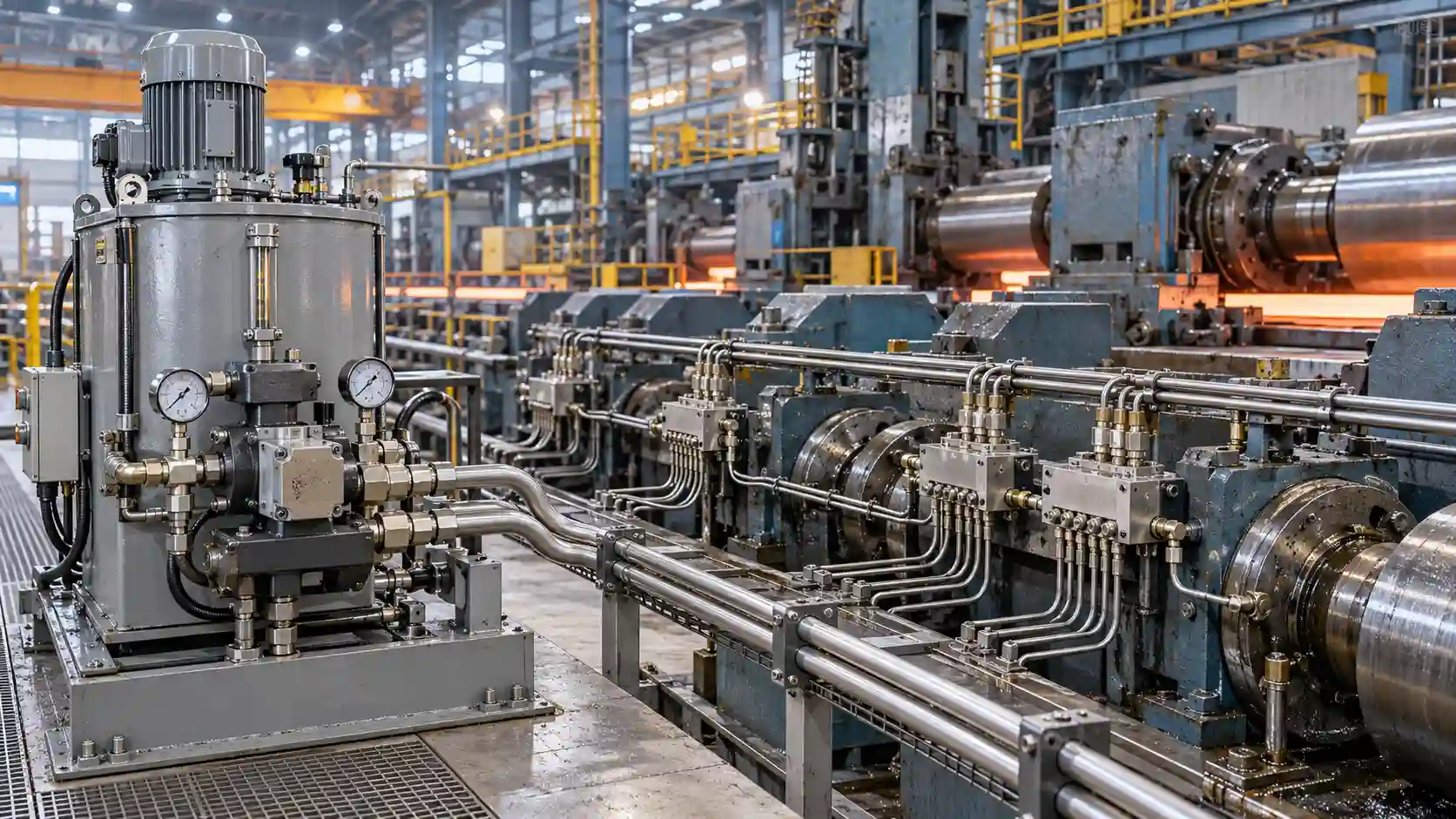
A steel plant is not a place for a dry bearing. Not a cement kiln, or a mining crusher. However, many facilities rely on a grease gun and a long list of items to be greased by a technician.
This is good to go until it isn't. Some points are located behind guards, high on structures or deep inside the dusty areas. Some are overlooked and others are over-filled. Bearings cost twice for the errors.
That's where a Dual line lubrication system comes into its own. It provides grease to hundreds of points from one station on a regular basis. When it's a heavy duty lubrication system that operates continuously 24/7, consistency is important. Let's see how it functions and what to look out for before you purchase it.
What Is a Dual Line Lubrication System?
A dual line system is a centralised lubrication system based upon two primary lines. One line is pressurized with grease while the second line is depressurized. Then it's the other way round.
These are where metering devices are located. Each is fed a metered dose of grease to one bearing or machine part.
So, why is it good for industry:
- Supplies a very large number of lubrication points to be served by one pump station.
- Works on long pipe runs and spread out layouts
- Maintains performance under increased back pressure
- Take care of heavy, viscous lubricants without difficulty.
It's like a delivery system that is driven by pressure. The force is provided by the pump. The distributors determine the amount of distribution.
How Does a Dual Line Grease Lubrication System Work?
The logic is simple. Two lines take turns being the “pressure” line and the “relief” line. This is one complete cycle:
- The pump is turned on and the changeover valve directs grease to Line A; Line B is connected to the reservoir and remains unpressurized.
- Within each metering distributor a piston moves and delivers a fixed quantity of grease out.
- After all the distributors operate, an increased pressure is reached which is preset. This is detected by a pressure switch and the control panel indicates the half-cycle.
- The changeover valve is a reversing valve. Line B is under pressure and Line A is vented.
- The distributors rotate once more, and they serve their 2nd set of outlets.
- Once both lines have completed their cycle, the entire lubrication cycle is completed. The system then waits for the next interval in the program.
The ability to provide pressure feedback is the most important advantage of Dual line grease lubrication systems. The panel isn't satisfied that grease was sent. It confirms the cycle through pressure, thus ensuring the reliability of the dual line lubrication system working principle even in large networks.
Key Components of a Dual Line Lubrication System
All components are assigned specific tasks. When one is not well matched the entire network suffers.
- High pressure grease pump: Provides the force to drive grease through extended grease lines and into loaded bearings. The number of points served is dependent on the pump capacity.
- Changeover valve: Valve that alternates between Line A and Line B at the end of each half-cycle.
- Fixed grease: Volume per set lubrication point (metering distributors). A properly selected dual line lubrication distributor maintains proper dosing throughout the entire line.
- Pressure switches: Detect change of pressure level and alert the changeover. They also assist in identifying obstructions or a leak.
- Reservoir: A container to hold the grease. It is equipped with level monitoring to alert you before the system dries out.
- Control panel: Establishes cycle timing, maintains alarms and coordinates the entire sequence.
Heavy Duty Industrial use of Dual Line Lubrication Systems
Bearings dislike heavy machinery. Loads are high, dust is never ending and many lubrication points are simply out of reach. Dual Line Lubrication Systems for heavy machinery are able to cope with these conditions.
- Steel plants- Heavy loads and heat for rolling mills and furnaces and casting equipment. Automated delivery eliminates people getting too close to hot zones to feed bearings.
- Cement Plants- Conveyors, crushers and kilns operate in dusty environments. Sealed piping provides fresh grease in the exact location.
- Mining- Continuous run of crushers, mills and conveyor drives in harsh conditions. Manual rounds are reduced in hazardous areas by central lubrication.
- Power Generation- Lubrication of Fans, coal-Handling equipment and auxiliaries over a wide layout.
- Heavy manufacturing- Consistent dosing for presses, large machine tools and material-handling lines.
In all of these, the common problems include: high bearing loads, polluted environments, concealed lubrication points and extensive piping systems. Well designed industrial lubrication systems are designed to handle just this.
Benefits of Dual Line Grease Lubrication Systems in Heavy Machinery
You've already learned the general case with central lubrication. When it comes to dual line grease lubrication systems, here are the key points:
- Scheduled grease applications to all locations, each cycle.
- Fewer missed or overfilled grease points
- Appropriate application of resources to each bearing that is consistent with the individual bearing's need.
- Simple lubrication at inaccessible or remote sites
- Scheduled cycles and alarms for easier maintenance planning.
This type of Automatic grease lubrication system also leaves room for your maintenance staff to inspect and repair the system where there is a need for true expertise.
How to Choose the Right Dual Line Lubrication System for Industrial Use
Most of the work in choosing the right system is in asking the right questions at the proper time. Look at these factors:
- Operating pressure- Ensure the pump and components are compatible with your longest and toughest line.
- Number of lubrication points- Record existing points and allow for added points.
- Pumping capacity- Must be able to accommodate all grease requirements for the cycle without operating it at its maximum capacity.
- Grease compatibility- Check if grease is compatible with your grease pump, distributor and seal.
- Piping distance- Longer runs contribute to increased pressure drop, impacting design.
- Equipment conditions- The material and sealing selection is affected by heat, dust and moisture.
- Ease of access for maintenance- Position the reservoir, pump and distributors so that your staff can easily reach them.
As a buyer, request a layout proposal, availability of spare parts and commissioning support from each of the Dual line lubrication system manufacturers that you have narrowed down. A reliable heavy duty lubrication system should include a warranty and a support program.
Why Choose Techno Drop Engineers for Dual Line Lubrication Systems?
Industrial buyers want to know about the floor of the plant and not the catalogue. Having to do with industrial lubrication, Techno Drop Engineers' range includes centralized lubrication solutions for heavy machinery.
When you contact us, you can expect the following:
- Help to select the right system for your machine and load.
- Any discussion of your point count and layout options.
- Technical support via enquiry and selection.
If you are comparing dual line grease lubrication systems manufacturers, explore the dual line lubrication system product page and request a quotation. Share your machine details, and Techno Drop Engineers will help you shortlist the right setup.
FAQs
1. What is a dual line lubrication system used for?
Delivers grease to a multitude of lubrication points for large machines from one pump station. It is a replacement to manual greasing and ensures consistent dosing. It also allows access to inaccessible and difficult to reach locations.
2. Are dual line grease lubrication systems suitable for heavy machinery?
Yes, if they are properly designed. They work with high pressures, long piping runs and a lot of points simultaneously. That will work with heavy loaded bearings as long as the system is sized for the machine.
3. Which industries use dual line lubrication systems?
They are used in steel, cement, mining, power generation and in heavy manufacturing. These industrial lubrication systems fit in any place where there is dust, heat, heavy loads and hard-to-reach bearings.
4. How do I choose reliable dual line lubrication system manufacturers?
Look at technical details, lubricant compatibility and engineering knowledge. Inquire about commissioning and after-sales services. A good manufacturer fits the system according to your plant's requirements rather than installing a standard kit.
5. How is a dual line system different from a single-line system?
Single line systems are generally used for small installations that require less number of points. Dual line systems are applied to much more points on much longer distances and on much higher pressure. Pressure feedback is also used to check that each cycle is made.
6. How often does a dual line lubrication system need maintenance?
Ensure clean grease is always in the reservoir and inspect pumps, valves and pressure switches during regular shutdowns. Check pipelines for leaks or blockages. These intervals vary from one operating condition to another and are subject to manufacturer recommendations or recommendations.
Conclusion
The right grease at the right time in all bearings is ideal for heavy-duty equipment. With a well-designed dual line system that's no routine, it's a maintenance gamble. It's all about size, the right parts and a proper lubrication program.
|
Contact Techno Drop Engineers today to discuss specifications, or to request a quotation. |