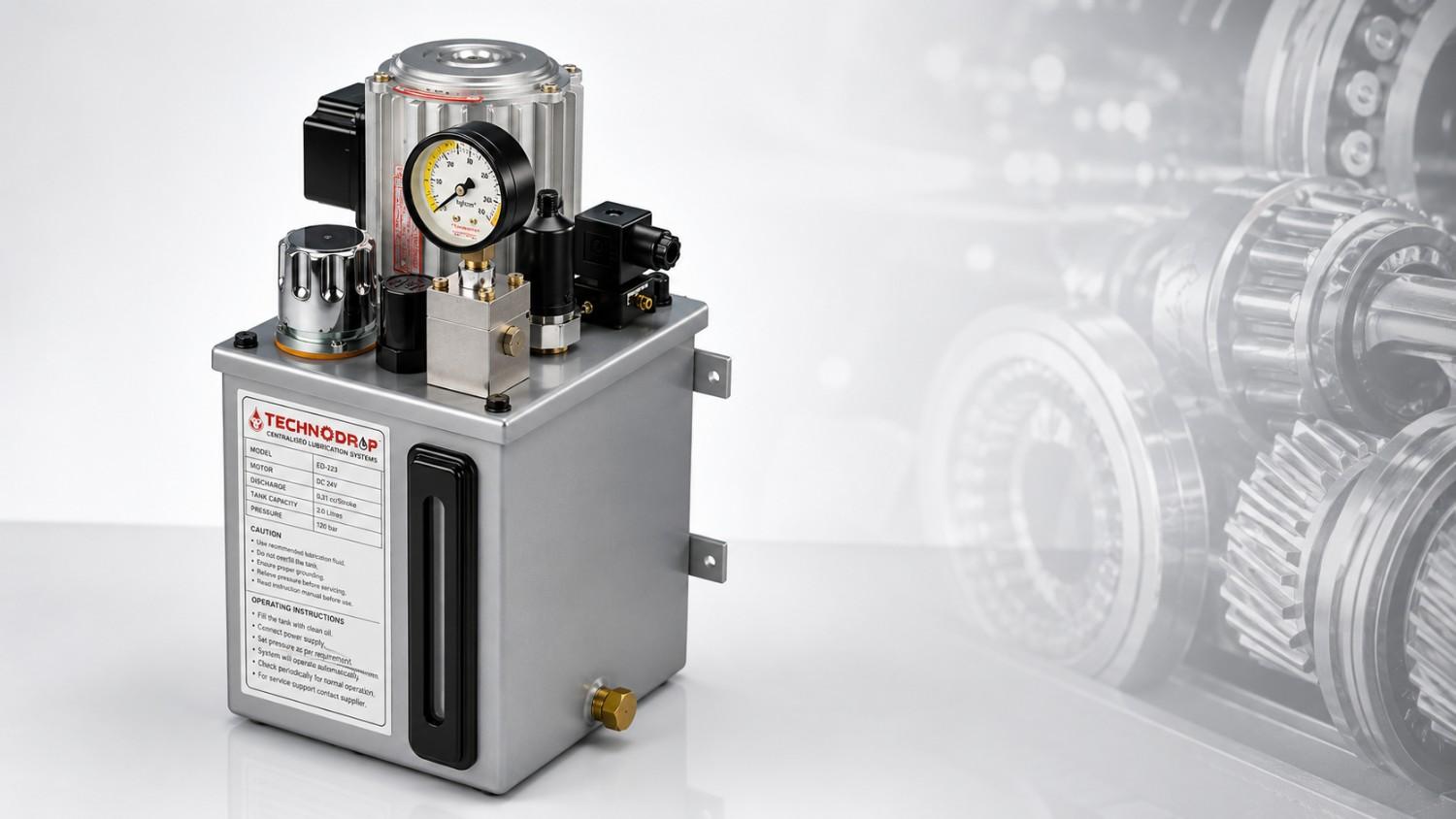
How automatic and centralized lubrication systems cut downtime, protect machinery, and lower long-term maintenance costs across steel, cement, and power plants.
Go stand next to a rolling mill for five minutes. Or a kiln. Nothing in a steel or cement plant sits still. Underneath all that motion is one boring job keeping it from falling apart: getting oil or grease to the right spot, on time. Miss it by a few hours and wear creeps in fast. This is why a centralized lubrication system exists. No technician walked the floor with a grease gun, hoping he didn't skip a point. An automatic lubrication system just does it — quietly, on schedule, without anyone needing to remember.
What Is a Centralized Lubrication System?
Picture plumbing, but for grease. One reservoir, a network of lines, pumps pushing lubricant to dozens of points across a machine — sometimes an entire line. Some setups meter a fixed amount per point. Others use progressive blocks that fire off in sequence. Doesn't matter whether it's a centralized oil lubrication system or a centralized grease lubrication system built for heavier bearings — same job, different lubricant, delivered on time without leaning on someone's memory.
Why Is It Important?
Here's the annoying part about skipped lubrication — it doesn't announce itself. Friction quietly builds heat. Heat wears things down. Then one day, mid-shift, something just seizes. A central lubrication system removes that guesswork completely. Zoom out and a proper industrial lubrication system strategy keeps the whole plant moving in sync, not just one machine limping along on luck.
- Fewer unplanned stoppages from bearings and gears that quietly ran dry
- Way less time lost to manual greasing rounds, day after day
- Less over-greasing too — which wastes lubricant and pulls in dust, if you've ever noticed
- Temperature and vibration stay in check, shift after shift, without babysitting
|
Did You Know: One under-lubricated bearing can quietly push up a machine's energy draw — often well before anything looks visibly wrong. |
Types of Centralized Lubrication Systems
Not every plant needs the same rig. Depends on layout, distance, how many points there are to cover.
- Single-line — one main line feeding metering valves at each point. Fine for smaller machines.
- Dual-line — better when distances stretch out, or there's just a lot of points. Cement and steel plants lean on this a lot.
- Progressive — distributor blocks fire in a fixed order. Works well where space is tight.
- Grease-heavy jobs — bearings, chains, open gears — usually call for an automatic grease lubrication system built specifically for that.
- Oil circuits, on the other hand, suit gearboxes and anything needing continuous flow rather than metered shots.
Features to Look For
The pump gets all the attention. It's rarely the thing that actually makes or breaks the system, though.
- Solid central lubrication system fittings — dust, moisture, vibration shouldn't faze them
- Timers or controllers you can actually program, not a fixed factory default
- Reservoirs and tubing that hold up after a few rough seasons, not just the first one
- Plays nicely with whatever PLC or automation panel is already running
- An easy spot to top up lubrication equipment — ideally without stopping the line for it
- A proper alarm when levels drop or a line blocks. Nobody wants to find out the hard way.
Product Overview
Most manufacturers build centralized lubrication systems in modules now. A plant can start with its most critical machines and grow the network later — no need to commit to everything upfront. Reservoir size, pump type, distributor count — all of it shifts depending on point count and travel distance. Electric motors handle most jobs fine; pneumatic or battery units make more sense where wiring's a hassle. Really it comes down to three things — machine count, point spacing, and how rough the environment is. Sort that out early and expensive retrofits become a lot less likely.
|
Trivia: "Lubrication" comes from the Latin lubricus, meaning slippery — fitting, given what the whole system exists to fight. |
Benefits
- Parts simply last longer once friction and heat stop piling up unchecked.
- Maintenance staff stop repeating the same greasing rounds week after week.
- Metered dosing means less lubricant wasted — no more, no less than needed.
- Fewer hands near moving parts, which is a genuine safety win, not just a checkbox.
- Output stays steadier once stoppages stop derailing the schedule.
- Maintenance spends trends down across the equipment's whole working life.
There's a quieter upside too. An automatic lubrication system makes tracking almost effortless, and maintenance teams start noticing odd consumption patterns weeks before a bearing would've shown any physical sign of wear.
Applications and Use Cases
Honestly, wherever there's continuous machine motion, this pays off. A few sectors just see it faster than others.
- Steel plants — rolling mills, casting lines, furnace conveyors, taking constant heat and load
- Cement plants — crushers, kilns, conveyors, running through dust and abrasive material nonstop
- Power plants — turbines, generators, pumps that genuinely can't afford to go down unplanned
- Mining operations — crushers and haul equipment, under nonstop mechanical stress
- Manufacturing units — CNC lines, presses, packaging machinery that just needs to keep moving
Manual vs Centralized Lubrication
| Aspect | Manual Lubrication | Centralized / Automatic Lubrication |
|---|---|---|
| Labor Requirement | High — needs regular technician rounds | Low — runs on programmed cycles |
| Lubricant Accuracy | Depends on operator judgment | Consistent, metered dosing |
| Downtime Risk | Higher, due to missed or delayed greasing | Lower — timely delivery reduces failures |
| Monitoring | Difficult to track consistently | Easier, with alarms and indicators |
| Long-Term Cost | Can rise from repairs and lubricant waste | Generally lower over the equipment’s lifespan |
Expert Tips and Buying Guide
- Map every lubrication point first. Only then decide between single-line, dual-line, or progressive.
- Match the pump — electric, pneumatic, battery — to what the site's power access actually allows
- Make sure central lubrication system fittings suit the real temperature and dust conditions on site, not just the brochure numbers
- Check maintenance access. Reservoirs and filters need to be serviceable without shutting the whole line
- Weigh after-sales support just as heavily as upfront cost when comparing centralized lubrication system manufacturers
- Start with the critical machines. Expand once budget allows — no reason to rush the whole plant at once
|
Fact: Poor lubrication sits near the top of the list for bearing failures in industrial equipment — ahead of plain old fatigue wear. |
Techno Drop Engineers
Techno Drop Engineers is a reputed manufacturer of centralized and automated lubrication systems in India. Founded in 1999, the organization concentrates on offering reliable lubricating products for improving efficiency and increasing durability of machines with 26+ years of experience. The organization offers its lubrication systems to diverse sectors such as steel plants, cement works, thermal power plants, mines, and manufacturing units. Techno Drop Engineers is run by Sagar Kaushik. Some important features of Techno Drop Engineers include quality products, experienced engineers, quality manufacturing processes, and excellent customer support services.
FAQs
1. What's the difference between a centralized lubrication system and manual greasing?
Ans: Manual greasing depends on a technician walking the floor with a grease gun, hoping nothing gets missed. A centralized lubrication system removes that guesswork entirely — pumps and distributor lines deliver metered lubricant to every point automatically, on a fixed schedule, without relying on someone remembering to do the rounds.
2. How often does a centralized lubrication system need lubricant refills?
Ans: It really depends on reservoir size, machine count, and how many points the system covers. Larger setups with bigger reservoirs can run for weeks between refills, while smaller units need more frequent topping up. Most plants build refill checks into their regular maintenance schedule rather than waiting for a low-level alarm to go off.
3. Can a centralized lubrication system handle both oil and grease?
Ans: Yes, but usually not in the same circuit. A centralized oil lubrication system suits gearboxes and continuous-flow machinery, while a centralized grease lubrication system is built for heavier bearings, chains, and open gears. Plants running both types often install separate circuits tailored to each lubricant's flow characteristics.
4. Is a centralized lubrication system worth it for smaller plants?
Ans: Often, yes — modular designs let smaller plants start with just their most critical machines instead of covering everything at once. Even a single-line system on a handful of high-wear points can cut downtime noticeably. The network can always expand later as budget allows, so it's rarely an all-or-nothing decision.
5. What causes most failures in centralized lubrication systems?
Ans: Blocked lines and worn central lubrication system fittings account for a big share of failures, usually from dust, moisture, or vibration wearing down seals over time. Skipped inspections make it worse — a small blockage left unnoticed can quietly starve an entire section of a machine before anyone spots the problem.
6. How do I choose between different centralized lubrication system manufacturers?
Ans: Don't just compare specs sheets — ask about after-sales support, fitting availability, and how easy the system is to service without stopping production. Match pump type to your site's power access, and check that fittings are rated for your actual dust and temperature conditions, not just standard lab test numbers.
Conclusion
Centralized lubrication stopped being optional a while ago, really. It's a fairly direct answer to downtime, thin maintenance staffing, and costs that just keep creeping upward. Whether it's a centralized grease lubrication system for heavy bearings or a centralized oil lubrication system built for continuous-flow machinery — either way, the payoff shows up the same: fewer breakdowns, a steadier line. Heavy industry's automating almost everything else already. Lubrication happens to be one of the easier wins left, and more often than not, it pays for itself fast.
Get Started
Fewer breakdowns, less downtime — that's really the whole pitch. Get in touch with us and find the right centralized lubrication system for your plant.