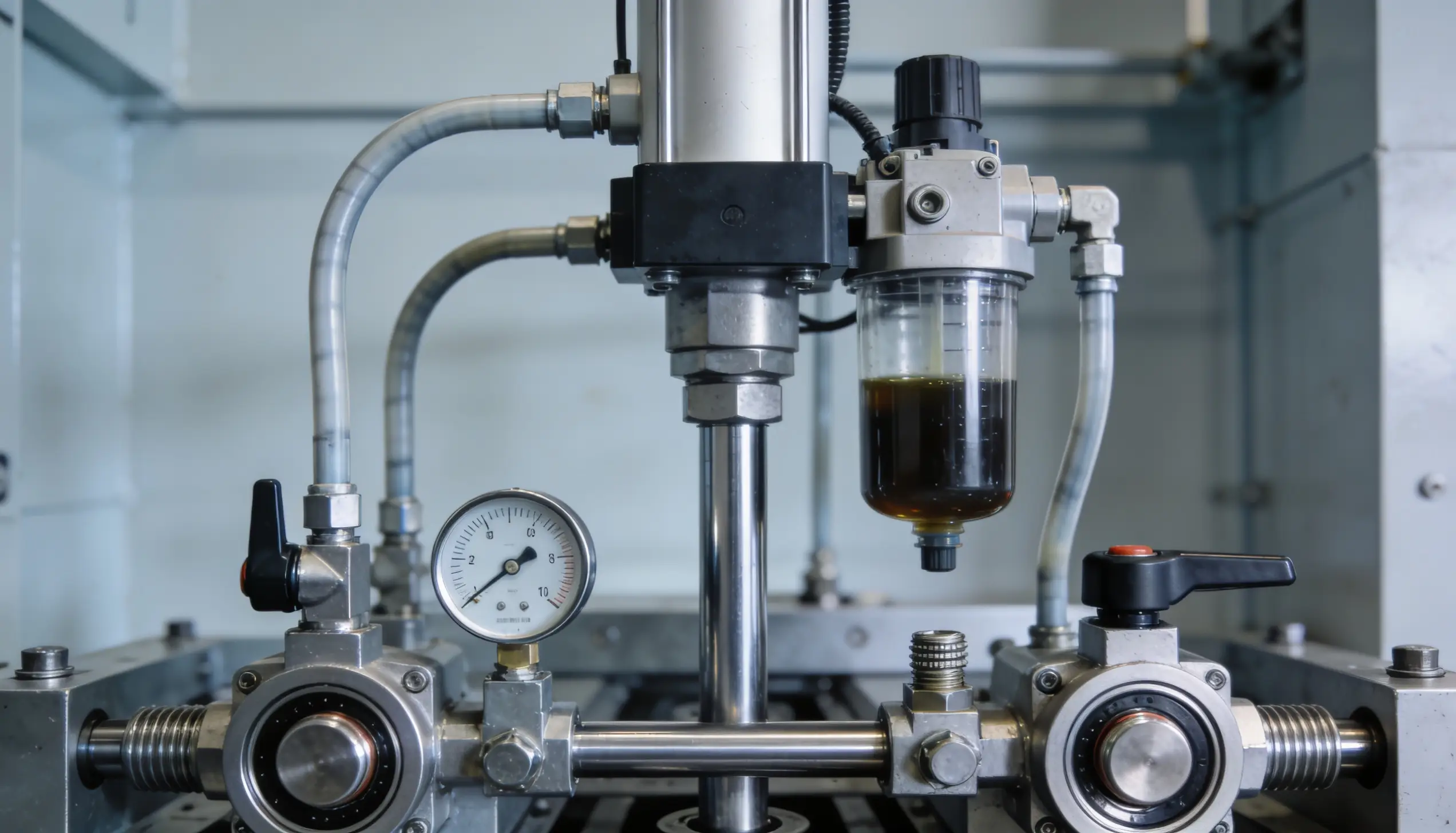
Industrial equipment works on huge loads, temperature extremes, and 247 shifts. The core of any dependable machine is an efficient lubrication system - the most significant single item in avoiding metal-to-metal contact, decreasing thermal wear, and increasing component life in manufacturing, mining and process industries.
When procurement teams consider the issue of capital expenditure, the choice of the appropriate system is not only a technical one, but also a strategic one. The improper decision leads to unplanned downtime, premature bearing failure and over-inflated maintenance expenses. The initial step on the way to making an informed and long-term investment is to understand the types of lubrication and performance parameters.
What is a lubrication System and its functionality?
A Lubrication System is a mechanically or electronically driven system that provides lubricant - oil or grease - in the right amounts and at the right time to friction points in a machine. It gets rid of the necessity of manual re-greasing, provides uniform film thickness, and shields surfaces with high pressure and velocity.
Core Technical Criteria Necessary For Analysis
- Fluid flow and pressure limits (e.g. 10–350 bar; Varies based on type of system)
- Compatibility of lubricant with viscosity grade (Iso VG 32 to VG 460)
- Operating temperature range of 0 to 200°c (For high-load applications)
- Reservoir capacities May be as small as 0.5 L for micro systems & as large as 500+ l for centralized systems
- Monitoring capabilities include > pressure switch > flow sensor > alarm output.
- Material used for housing (A whole variety here) May be cast iron, stainless steel 316, or a type of aluminium alloy.
Industrial Applications
The applications of lubrication systems are very diverse: heavy engineering to food processing. The following table aligns the main sectors with the application requirements:
| Industry | Application |
|---|---|
| Automotive Manufacturing | Engine assembly line lubrication |
| Steel & Heavy Metals | Rolling mill bearing protection |
| Mining & Quarrying | Crusher and conveyor maintenance |
| Power Generation | Turbine and generator shaft oiling |
| Food & Beverage | NSF-rated food-grade lubrication |
| Construction Equipment | Hydraulic boom and track systems |
Types of Lubrication Systems
The process of choosing the right variant starts with a comprehension of the existing variants. All systems apply to a different operation profile:
- Manual Lubrication — Grease or oil applied by operators at pre-determined times; can be used on low-speed, low-criticality components.
- Centralised Lubrication — Single pump supplies lubricant to more than one point through distribution lines; best when there are many points of friction spread throughout a machine.
- Oil Bath Lubrication - Parts are partially immersed in oil; used in gearboxes and enclosed transmissions.
- Mist Lubrication- Atomised oil delivered to bearings by compressed air; most of the time used with high-speed spindles.
- Circulating Oil System - This is the constant flow of oil through reservoir, filtration and back; common with turbines and compressors.
- Automatic Greasing System - Programmable dispensers provide grease at a predetermined frequency; common in the lubrication system in automobile and heavy-vehicle industries.
- Pressure-Fed (Forced) System - Engine mounted pump pushes oil to all important galleries; the typical lubrication system in diesel engines used in both fixed and mobile equipment.
Key Features and Benefits
Here are some features and benefits.
Features to Specify When Ordering
- Volumetric metering units that may be adjusted to accurate volumetric control per lube point.
- Programmable PLC or timer programmable controllers with fault-alert outputs.
- Filtration assemblies (10-25 micron) incorporated in the supply circuit.
- Chemical or washdown stainless or corrosion resistant fittings.
- Large multi-point installations, dual-line or progressive distribution.
Advantages to Bulk Buyers and Procurement Teams.
- Less unplanned downtime: automated delivery eliminates human error in lubrication intervals.
- Reduced use of lubricants: metered dispensing reduces wastage of over-greasing by 30-50%.
- Long service life of the components: the regular film protection minimizes the frequency of bearings replacement.
- Compliance-ready: systems can be programmed to satisfy IS, DIN and ISO maintenance requirements.
- Remote monitoring: the new units are compatible with SCADA and Industry 4.0.
How to Choose the Right Lubrication System?
This checklist will assist you in shortlisting and specifying the correct system for your equipment:
- Plot all points needing lubrication on the machine- Count the friction interfaces, bearings, chains, guides etc.
- Identify lubricant for each lubricating point - Confirm NLGI (0-3) grease or iso VG oil grade.
- Identify the operational conditions- Extreme temperature ranges, dust ingress, water ingress, chemical atmosphere dictate housing and seal designs.
- Identify the operation duty cycles- Continuous machines need circulating/ centralised lubrication systems, whereas machines operating on duty-cycles can use timer-based automatic greasers.
- Identify integration needs- Is integration with PLCs, alarm panels, or an existing IoT based monitoring system necessary?
- Investigate after-sales support-Spare parts, response times of the service engineers and the warranty terms will directly contribute to the overall cost of ownership.
- Request for certifications- BIS certifications, Material Test Certificates (MTR), Factory Acceptance Test reports (FAT) from the system manufacturer are essential.
- Compare lifecycle costs of the systems- The purchase price of the systems is often far less important than the system's Mean Time Between Failures (MTBF) and its subsequent spare parts costs.
Quick reference: system selection by machine complexity
| Parameter | Low-Complexity Machines | High-Complexity Machines |
|---|---|---|
| System Type | Manual / Oil Bath | Centralised / Automatic |
| Maintenance Frequency | Weekly / Monthly | Continuous / Scheduled |
| Ideal Operating Temp. | Ambient to 80°C | Up to 200°C+ |
Benefits of Purchasing from Indian Lubrication Systems Manufacturers
Sourcing from reputable Lubrication Systems Manufacturers in India offers the following tangible benefits from procurement perspective over simply being cost competitive:
- Cost advantages through manufacturing costs at 20-40% lower than comparable European sourced equipment
- Customization availability: reservoir dimensions, pressures and fittings easily tailored to project specific requirements.
- Lead times are shortened: domestic manufacturing and inventory considerably cut delivery times as compared to imported equipment
- IS and ISO standards: Top-tier plants boast BIS standards, adhering to global quality norms
- Vendor support: response from Indian engineering team to RFQs, site visits and commissioning assistance quicker than foreign counterparts.
Benefits of Sourcing from Regional Dealers and Suppliers
The operational benefit to be gained from associating with well-reputed Lubrication Systems Suppliers in India and approved Lubrication System dealers in India operating from an industrial location such as Pune, Ahmedabad, Chennai, and Delhi NCR further include:
- Shorter transport corridor cut freight costs and transit damage risk for large volume orders
- Regional dealers usually keep inventory of all high volume products, ensuring delivery within 24-48 hours even in case of urgency
- Local dealers with prior knowledge of state legislation and cluster-specific requirements will simplify vendor selection and acquisition processes
- On-site demonstration and engineering services at the site without the cost and bother of travelling to the manufacturing plant.
The Role of a Reliable Lubrication System Company in Your Supply Chains
A credible lubrication system supplier functioning as a supply chain partner, cross-validates technical specifications against machine OEM data, handles multi-SKU consolidation orders, co-ordinates factory visits and provides organized after-sales support such as after-sales service contracts and maintenance schedules. This effectively mitigates the risk of purchasing, safeguarding your production across the plants. Techno Drop is one such platform.
About Techno Drop Engineers
Techno Drop Engineers is a reputed manufacturer of centralized and automated lubrication systems in India. Founded in 1999, the organization concentrates on offering reliable lubricating products for improving efficiency and increasing durability of machines. The organization offers its lubrication systems to diverse sectors such as steel plants, cement works, thermal power plants, mines, and manufacturing units. Techno Drop Engineers is run by Sagar Kaushik. Some important features of Techno Drop Engineers include quality products, experienced engineers, quality manufacturing processes, and excellent customer support services.
FAQs
1. What is a lubrication system in industrial machinery?
Ans: A lubrication system is a mechanical or automated setup that delivers oil or grease to moving machine components to reduce friction, wear, heat generation, and equipment failure.
2. Why is choosing the right lubrication system important?
Ans: The correct lubrication system improves machine efficiency, reduces downtime, extends bearing and component life, lowers maintenance costs, and enhances operational safety.
3. Which lubrication system is best for heavy industrial machinery?
Ans: Centralised and automatic lubrication systems are generally preferred for heavy-duty industries such as mining, steel plants, power generation, and cement manufacturing.
4. What is a centralized lubrication system?
Ans: A centralized lubrication system uses a single pump to distribute lubricant to multiple lubrication points automatically through pipelines and metering units.
5. What lubricant viscosity grades are commonly used?
Ans: Industrial lubrication systems commonly support ISO VG oil grades ranging from ISO VG 32 to ISO VG 460.
6. What is the advantage of automatic lubrication systems?
Ans: Automatic lubrication systems provide consistent lubricant delivery, reduce manual errors, minimize over-greasing, and improve machine reliability.
7. How do lubrication systems reduce maintenance costs?
Ans: They reduce friction-related wear, prevent overheating, decrease unexpected breakdowns, and extend equipment service intervals.
Conclusion
Select a lubrication system that is the "right" fit for the machinery not just in terms of specification but in its overall reliability, cost-effectiveness and plant safety. Be it a pressure-fed circuit for a high power diesel engine, an automatic greaser for commercial vehicle fleet, or a centralized system for multi-machine setup, each choice criterion (be it flow rate or grade of the lubricant) needs to be assessed in accordance with the function duty and surrounding conditions for the specific machinery.
The Indian manufacturing industry has a robust structure of competent suppliers that ensures that engineers and procurement professionals can readily avail top-grade machinery locally. By collaborating with credible Lubrication System Suppliers in India, assessing them based on technical validation, after-sales expertise and total cost of ownership will allow you to gain a reliable system.
Work with certified Lubrication System Manufacturers in India and contact us today for specifications, bulk pricing and rapid delivery.