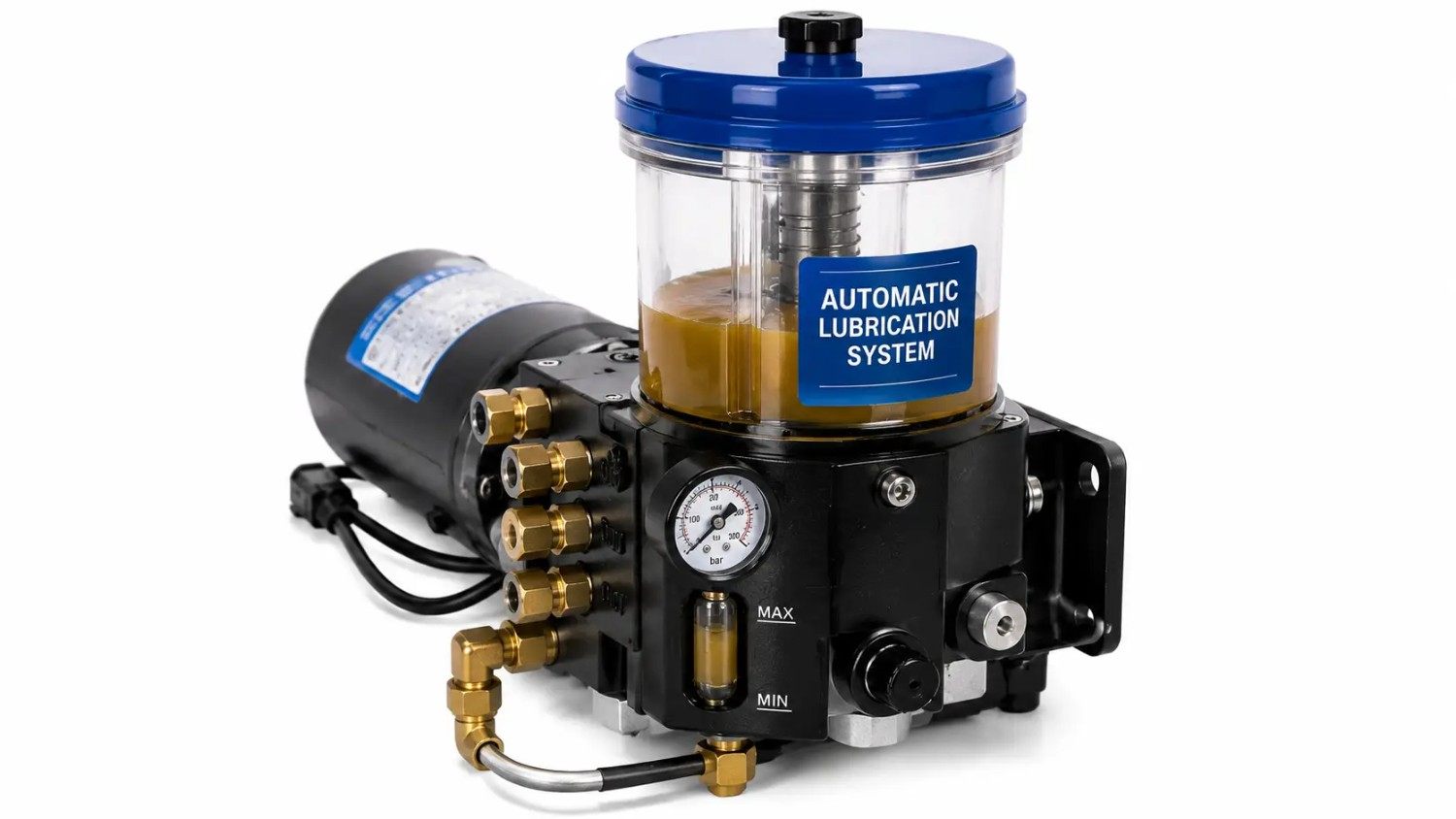
Walk into almost any Indian factory and you'll still see it - a technician with a grease gun, a clipboard, and a route he's walked a hundred times before. That's Equipment lubrication the old way. It looks cheap. It looks simple. And on paper, it is.
But talk to a maintenance head who's dealt with a bearing seizure at 2 AM, and the story changes. Missed points, too much grease here, not enough there, a worker's hand a little too close to a moving shaft. These costs don't show up on any invoice, yet they're real - and it's why plants are quietly moving toward an Automatic lubrication system.
What Is Manual Greasing, and Why Does It Still Exist?
Manual greasing is exactly what it sounds like. Someone walks the floor, finds each lubrication point, and applies grease by hand or with a pneumatic gun. Simple. Low cost to set up. That's precisely why it's stuck around this long - no infrastructure, no learning curve, just a person and a tool.
The trouble starts when machines get faster and more crowded with moving parts. A structured Lubrication System removes the guesswork; manual routines don't. Technicians end up relying on memory, or a log filled in after the fact. Points get skipped. Grease volumes swing between too little and too much, sometimes on the same machine within a week.
Why Manual Lubrication Becomes a Safety Liability
Understand the reason behind manual lubrication becoming a safety liability:
- Reaching rotating shafts and gears often means working close to equipment that's still partly running.
- Overhead or tight-corner points push technicians onto ladders or into gaps they shouldn't be in.
- Rushed greasing during shift changes is where slips and cuts tend to happen.
- A skipped point today can mean a sudden failure next week - and an emergency repair nobody planned for.
- Excess grease turns the floor slippery, a fall risk hiding in plain sight.
Why Is Proper Lubrication Important for Machine Health?
Good Equipment lubrication does more than just cut friction, honestly. It pulls heat away, flushes out contaminants, keeps corrosion at bay, and takes the edge off shock loading. Skip the consistency, and machines run hotter, wear out faster, fail with little warning.
That failure shows up as Machine downtime - and downtime is never cheap. Production schedules slip, repair bills climb. A reliable Lubrication system fixes this by feeding every critical point the right amount, at the right time, without leaning on someone's memory to get it right.
Types of Lubrication Systems Worth Considering
Here are the types of lubrication systems:
- Centralised lubrication system - one reservoir feeding multiple points at once. Good for large, heavily loaded machinery.
- Automatic lubrication system - timed, precise doses, no manual step. Less labour, fewer errors.
- Grease lubrication system - built for bearings, gears, and other load-bearing components.
- Progressive and dual-line setups - for machines with points scattered across a wide area, common in steel or cement plants.
- Portable and motorised units - a smaller step for smaller machines, or an easy start away from manual greasing.
Features to Look For Before You Switch
Here are the features to consider before you switch:
- Programmable intervals matched to how the machine actually runs.
- Fittings that don't leak, parts that don't rust out in a few months.
- Should handle oil or grease, whichever the job needs.
- Reservoir and pump status you can check at a glance.
- A supplier who's reachable after the sale, not just before it.
Product Overview: Where the Right Manufacturer Fits In
Once manual greasing has run its course, the next step is finding the right partner. An established Grease Lubrication Systems Manufacturer In India will usually have a decent spread on offer - automatic lubrication pumps, progressive distributor blocks, grease nipples, fittings, motorised units, and complete Centralized lubrication system setups meant for heavy-duty use. Doesn't mean you just pick one off a list, though.
It isn't a one-size-fits-all purchase, though. Machine layout, number of points, and the operating environment all matter. This is where good Lubrication Systems Suppliers in India earn their keep - fitting the system to the line, not picking something off a catalogue at random.
|
TRIVIA The word lubricant comes from the Latin lubricare - to make slippery. Engineers were wrestling with this same problem back when chariot axles were the machinery of the day. |
Benefits of Switching to an Automated Approach
Here are the benefits of opting for an automated approach:
- Workers stay clear of moving parts during the lubrication cycle.
- Every cycle gets the right amount - no more, no less.
- Machine downtime tied to under- or over-greasing drops noticeably.
- Bearings and gears last longer, meaning fewer replacements.
- Grease overflow stops being a housekeeping headache.
- Maintenance staff get freed up for real Preventive maintenance work, not greasing rounds.
|
DID YOU KNOW A lot of premature bearing failures come down to poor or inconsistent lubrication - not bad material, not bad design. Just lubrication nobody kept on top of. |
Applications and Industries That Benefit Most
The industries that gain the most are the ones with the most lubrication points to manage - steel and rolling mills, cement plants, power generation units, mining equipment, large manufacturing lines running around the clock. Manual greasing just can't keep up there, not safely, not accurately.
Good Lubrication System Dealers in india know this, which is why they spend time on layout - matching the system to machine geometry so every bearing, gear, and chain gets what it needs, when it needs it.
|
FACT A properly tuned Automatic lubrication system tends to use less grease overall than manual greasing - simply because it delivers only what's needed, nothing extra. |
Comparison Table: Manual Greasing vs Automated Lubrication
Here are the comparison between manual greasing and automated lubrication:
| Parameter | Manual Greasing | Automated Lubrication System |
|---|---|---|
| Lubricant accuracy | Depends on operator judgement | Consistent, pre-set dosing |
| Safety exposure | Direct contact with moving parts | Minimal manual intervention |
| Monitoring | Manual logs, easy to miss points | Automated tracking of intervals |
| Downtime risk | Higher, due to missed points | Lower, with consistent coverage |
| Labour dependency | High | Reduced |
| Long-term cost trend | Rises with repairs and part wear | Optimised through preventive care |
Expert Tips / Buying Guide
Here are the expert tips that one should consider before buying:
- Walk the machine first. Mark every lubrication point before you even start comparing systems.
- Size the pump and reservoir around the actual duty cycle - not a rough estimate.
- Put Preventive maintenance schedules ahead of reactive, breakdown-driven repairs.
- Push suppliers for a layout suited to your site, not a standard kit off the shelf.
- Pick vendors who stick around for installation and servicing - not ones who disappear after the sale.
About Techno Drop Engineers
Techno Drop Engineers is a reputed manufacturer of centralized and automated lubrication systems in India. Founded in 1999, the organization concentrates on offering reliable lubricating products for improving efficiency and increasing durability of machines with 26+ years of experience. The organization offers its lubrication systems to diverse sectors such as steel plants, cement works, thermal power plants, mines, and manufacturing units. Techno Drop Engineers is run by Sagar Kaushik. Some important features of Techno Drop Engineers include quality products, experienced engineers, quality manufacturing processes, and excellent customer support services.
FAQs
1. Why do factories still rely on manual greasing when better options exist?
Ans: Honestly, it's just cheap and easy to start. No setup, no training curve, just someone with a gun walking a fixed route. Works fine when machines are simple. But once things get faster and more crowded with moving parts, that habit starts falling behind, and the gaps show up later as bigger headaches.
2. What actually goes wrong when greasing is left to memory and paper logs?
Ans: Stuff gets skipped. Some spots get way too much grease, others hardly any, and nobody notices in the moment. It's not tracked live, so small mistakes just sit there building up. Then weeks later a bearing seizes or a gear goes early, and good luck tracing it back to that one missed round.
3. How does hands-on greasing put workers at risk on the shop floor?
Ans: You're basically asking a person to reach toward a shaft that hasn't fully stopped. Overhead points mean someone's on a ladder they probably shouldn't be on. And shift changes? That's when corners get cut. Add grease on the floor and yeah, somebody's going down eventually.
4. What's the real cost of skipping a single greasing point?
Ans: Doesn't look like much day one. Runs a little warmer, wears a touch faster, nothing you'd notice. Then it just stops working. No warning, no lead time, just a repair crew scrambling. Now imagine that happening across dozens of points spread over a whole line.
5. How is automation different from just doing the same job faster?
Ans: Speed's not really the point here. Think about it — a machine doesn't forget a step, doesn't rush because shift's about to end, doesn't skip the awkward point at the back. Same dose, every time. And nobody's hand needs to go anywhere near the moving parts either.
6. What should a plant check before choosing a supplier for this switch?
Ans: Skip the price talk for a second. Will they actually come walk your floor? Will they size the pump for your machine, or hand you something generic? And after it's installed — do they still pick up the phone? That last bit matters more than people think.
Conclusion
On paper, manual greasing looks cheaper. In practice? Safety incidents, patchy Equipment lubrication, and rising Machine downtime quietly eat into that saving - and then some. A structured Automatic lubrication system protects the people on your floor as much as it protects the machines, and it makes real Preventive maintenance possible instead of just a checkbox exercise. Working with the right Lubrication System Dealers in india means the shift happens around your actual setup, not a template pulled off a shelf.
|
Thinking of moving past manual greasing? Talk To Our Team at Techno Drop Engineers for a lubrication system built around your machines. |